

Few names in the natural world carry the weight of the Serengeti. The word comes from the Maasai term siringet, meaning “the place where the land runs on forever,” and the first time you stand on its plains, the description feels almost too modest. Golden grassland rolls to every horizon, acacia trees break the skyline and somewhere out there, lions are waking up. A Serengeti National Park safari is the experience that defines Tanzania, and for many travellers, the experience that defines Africa itself.
This guide explains what makes the park extraordinary, which regions to explore, what you will see in each season and how to plan a safari that delivers the sightings you are hoping for.
Why the Serengeti Deserves a Place at the Top of Your List
Serengeti National Park covers roughly 14,750 square kilometres of northern Tanzania and forms the core of a much larger ecosystem that stretches into Kenya’s Maasai Mara. It is a UNESCO World Heritage Site and one of the most biologically rich landscapes on the planet.
What sets it apart is the combination of scale and abundance. Wildlife is not confined to a small viewing area. It is spread across vast, varied terrain, so every game drive feels like a fresh discovery. Resident predators are present year-round, the Great Migration moves through the park in a continuous loop and the sheer density of animals means a good sighting is rarely far away.
A Serengeti safari also has a pace that suits almost everyone. Mornings and evenings are for game drives. Midday is for rest. The result is a rhythm that is thrilling without being exhausting.
The Regions of the Serengeti
The park is not one uniform landscape. Each region has its own character, and a well-planned safari takes advantage of that variety.
Central Serengeti (Seronera). The most accessible region and one of the best for year-round big cat viewing. Rivers and kopjes (rocky outcrops) attract lions, leopards and cheetahs, and wildlife is resident throughout the seasons. Seronera is often the first stop on a safari and a reliable one.
Southern Serengeti and Ndutu. The short-grass plains here host the calving season from January to March, when hundreds of thousands of wildebeest gather and give birth. Predators gather too, making this one of the most dramatic periods of the year.
Western Corridor and the Grumeti River. A quieter region where the herds cross the Grumeti River, with crocodiles waiting below. Woodlands and riverine forest add variety, including colobus monkeys and abundant birdlife.
Northern Serengeti and the Mara River. Remote, beautiful and less visited, the north is home to the legendary Mara River crossings from roughly July to October. It is a favourite for travellers who want wilderness and drama in equal measure.
Eastern Serengeti and the Moru Kopjes. Rocky outcrops provide shelter for lions and a rare chance to look for black rhino, though sightings are never guaranteed.
The Wildlife You Can Expect
A Serengeti National Park safari offers some of the finest big game viewing in Africa. Typical sightings include:
- Lions, with some of the largest prides on the continent, often resting on kopjes or hunting at dawn
- Leopards, draped over the branches of acacia and sausage trees, especially along the Seronera River
- Cheetahs, using the open plains and termite mounds to scan for prey
- Elephants, buffalo and giraffes in the woodlands and grasslands
- Hippos and crocodiles in the rivers and pools
- Hyenas, jackals, topi, eland, zebras and over 500 bird species
Guides play a large role in how much you see. Experienced Tanzanian guides read tracks, interpret alarm calls from impala and monkeys and understand how predators behave, which often means they know where to be before the action begins.
The Great Migration in the Serengeti
Over a million wildebeest, plus hundreds of thousands of zebras and gazelles, travel through the park each year in a clockwise loop. The herds follow the rains and fresh grass, so their location shifts through the seasons.
- January to March: Calving on the southern plains and in Ndutu, with high predator activity.
- April to June: The herds move north through the central and western areas, with green landscapes and fewer visitors.
- July to October: The northern Serengeti and the Mara River crossings, the most famous phase of the migration.
- November to December: The return south as the short rains begin.
The herds follow the weather rather than the calendar, so exact timing varies from year to year. Expert operators track movements closely and adjust your route to keep you near the action.
A Day on Safari in the Serengeti
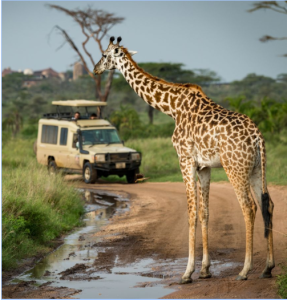
Safari days follow the natural rhythm of the wildlife.
Dawn. Tea or coffee greets you before sunrise, then you set out in a 4×4 vehicle with a pop-up roof. Cool air and soft light make this the best time for predator activity.
Morning. You follow tracks, watch herds graze and linger at sightings. A bush breakfast on the savannah is a popular treat.
Midday. Many travellers rest during the heat, while others continue with a full-day game drive and a picnic lunch to stay near a developing sighting.
Afternoon. The light softens, animals stir and photography improves. Afternoon drives often bring some of the best encounters of the day.
Sunset. The sky shifts to amber and violet, and the plains settle into evening.
Full-day game drives are especially rewarding in the Serengeti. They give you the freedom to wait for a leopard to descend a tree, or for a herd to decide to cross a river.
Ways to Enrich Your Serengeti Safari
Beyond classic game drives, consider adding:
- A sunrise hot air balloon flight. Floating silently above the plains as animals move below is one of Africa’s most celebrated experiences.
- A guided walking safari. Where permitted, walking with an armed ranger reveals details you miss from a vehicle, from tracks and insects to plants and bird calls.
- A Maasai cultural experience. Meeting the people who have shared this land for generations adds depth and context.
- A photography-focused itinerary. A dedicated vehicle and flexible schedule let you work with the light and wait for the shot.
- A visit to the Ngorongoro Crater. Pair the Serengeti with one of Africa’s most concentrated wildlife areas for a complete northern circuit.
How Long Should You Spend in the Serengeti?
The park is large, so time matters.
2 to 3 days: Enough for the central region and a taste of the park, suited to a short northern circuit.
4 to 5 days: The sweet spot for most travellers, allowing you to explore two regions and improve your chances of memorable sightings.
6 days or more: Ideal for migration chasers, photographers and anyone hoping to witness a river crossing, where patience is rewarded.
Many travellers combine the Serengeti with Tarangire, Lake Manyara and Ngorongoro Crater, or extend the trip with a Zanzibar beach finish or a Kilimanjaro climb.
Choosing the Right Style of Safari
Private safari. A dedicated vehicle and guide give you control over timing, which is ideal for families, couples and photographers.
Group departure. Shared departures lower the cost and suit travellers who enjoy company and a set schedule.
Fly-in safari. Light aircraft link the Serengeti with other parks, saving hours of road travel and adding spectacular aerial views.
Overland safari. Driving between parks lets you see the changing landscapes and works well for travellers who enjoy the journey as much as the destination.
Best Time for a Serengeti Safari
The Serengeti rewards visits year-round, and your priorities decide the best timing.
- For river crossings: July to October
- For calving and predator action: January to March
- For fewer visitors and green scenery: April to early June
- For excellent dry-season visibility: June to October
Book early for peak months, as the best guides and routes fill many months ahead.
Travelling Responsibly
The Serengeti’s future depends on responsible tourism. Park fees support anti-poaching patrols and habitat protection, and conservation-minded operators employ local guides and support nearby communities. Choose companies that respect wildlife distances, limit vehicles at sightings and give back to the land. Your choice of operator shapes the impact of your trip.
Plan Your Serengeti National Park Safari
A Serengeti safari is the kind of journey people spend years dreaming about. Whether you picture a lion at dawn, a river crossing under a blazing sky or the quiet of the plains at sunset, thoughtful planning makes it real. Contact our safari specialists to design a Serengeti itinerary around your dates, interests and the movements of the herds.
Conclusion
A Serengeti National Park safari delivers the wildlife, scale and sense of wonder that few places on Earth can match. From resident big cats and sweeping plains to the thundering drama of the Great Migration, every day brings something new. With the right timing, an expert guide and an itinerary shaped around your goals, you will return home with stories and photographs that last a lifetime. The plains are waiting.
Key Takeaways
- Serengeti National Park covers about 14,750 square kilometres and is a UNESCO World Heritage Site.
- Each region offers something different, from big cats in Seronera to river crossings in the north.
- The Great Migration moves in a continuous loop, so timing and region matter.
- River crossings peak from July to October; calving runs from January to March.
- Four to six days is ideal for exploring multiple regions.
- Experienced guides and full-day game drives greatly improve sightings.
- Choose responsible operators and book early for peak season.
Frequently Asked Questions
What is the best time for a Serengeti National Park safari?
It depends on your goals. July to October suits river crossings, January to March suits calving, and June to October offers strong dry-season wildlife viewing.
How many days do I need in the Serengeti?
Four to six days allows you to explore more than one region and improves your chances of exceptional sightings.
Can I see the Big Five in the Serengeti?
Lion, leopard, elephant and buffalo are regularly seen. Rhino are present but rare, so sightings are never guaranteed.
Is a Serengeti safari suitable for first-timers?
Yes. The park’s abundant wildlife and well-established safari routes make it an excellent choice for first-time visitors.
Are river crossings guaranteed?
No. Crossings depend on herd movement, weather and river conditions. Spending more days in the north improves your odds.
Is the Serengeti safe for families?
Yes. Many families enjoy the Serengeti. Check minimum age policies with your operator and plan shorter drives for young children.
Can I combine the Serengeti with other destinations?
Absolutely. Popular combinations include Ngorongoro Crater, Tarangire, Lake Manyara, Zanzibar and Kilimanjaro.
Should I book a private or group safari?
Private safaris offer more flexibility with timing and sightings, while group departures are more affordable. Your budget and travel style decide the best fit.